Let's face it, for the dedicated digital warrior, the true endgame boss isn't some mythical raid monster—it's the creeping, persistent ache that sets in after hours of glorious, immobile gameplay or work. You don't want that dull, throbbing back or stiff neck stealing your victory dance or ruining your post-session plans. The quest for a pain-free existence at the desk is real, and it requires more than just a flashy, expensive chair. It's time to rethink the entire sedentary stronghold.
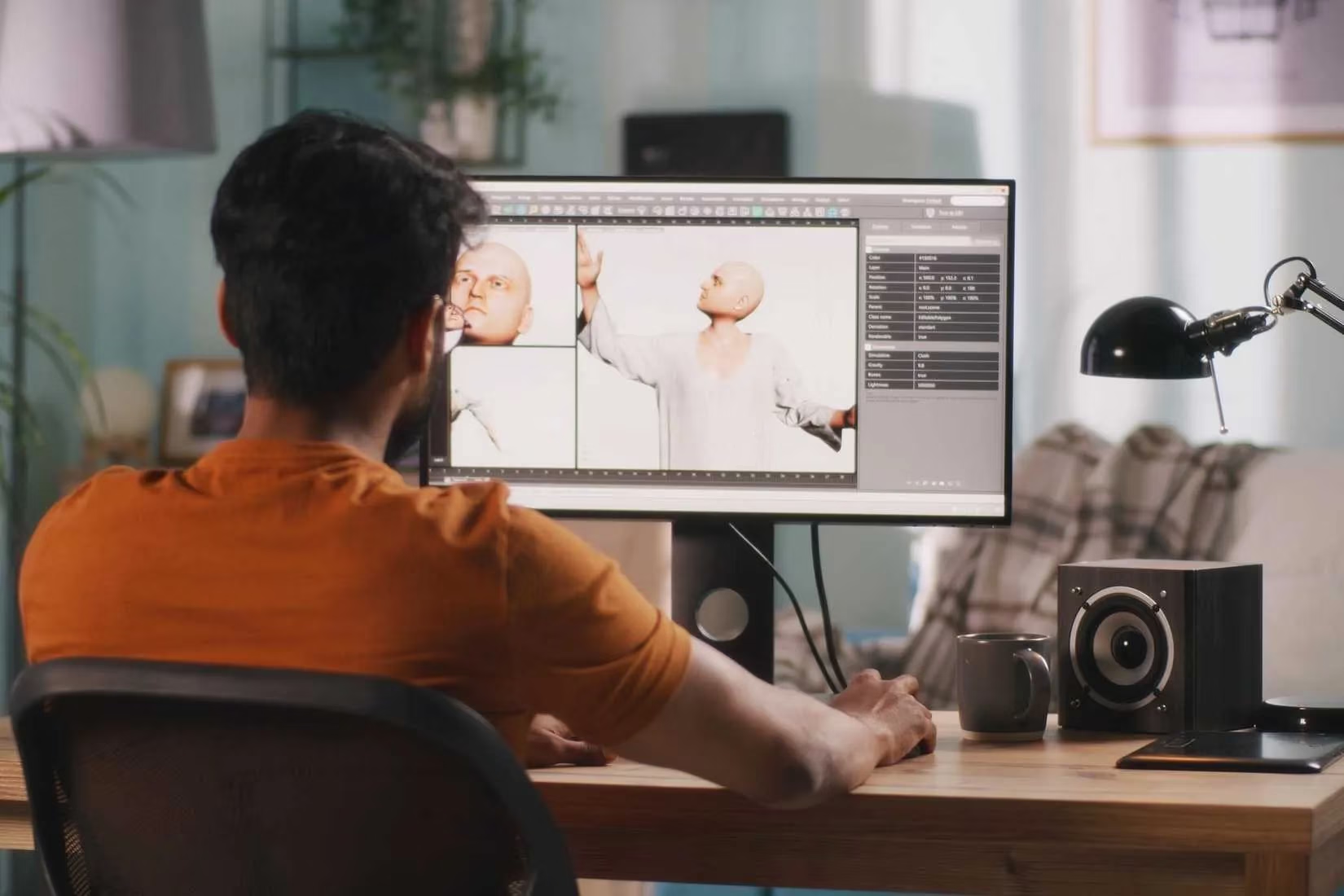
First, let's address the sacred cow of office ergonomics: lumbar support. Here's a spicy take for 2026: treating it as a cure-all is like using a health potion for a broken leg—it might mask the symptom, but it doesn't fix the underlying issue. That natural, powerful arch in your spine? It doesn't come from perfectly molding yourself to a chair's contours. It's forged in the fiery gym of your own lower back muscles. The more you lean (literally) on artificial lumbar props, the lazier and weaker those crucial stabilizers become. Before you know it, even the heroic act of lifting a new gaming console or a box of collectibles feels like a high-risk maneuver. A throne is important, but it's not the sole guardian of your spinal kingdom.
The secret? Active sitting. Think of it as maintaining a state of 'combat readiness' even while stationary. The worst posture is the one you've been stuck in for the last 45 minutes. If something starts to ping with discomfort, move! Shift your weight, change your angle, reclaim your comfort. As the wise physio-sages say: "The best posture is your next one." It's about dynamic stability, not static perfection.
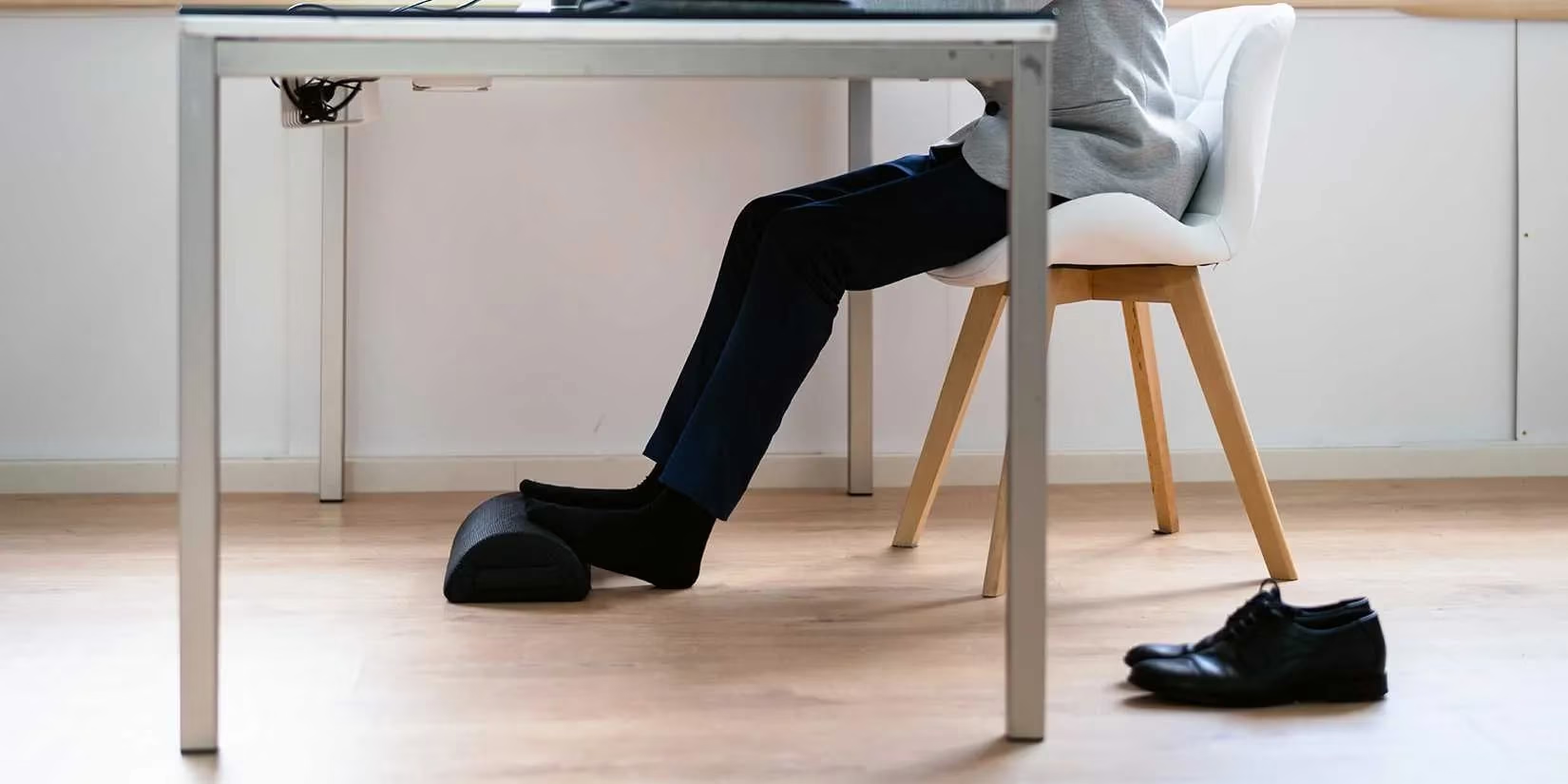
Now, let's talk about an underappreciated legendary item: the Footrest. Often dismissed as a mere accessory, this humble platform is a game-changer. If your feet are dangling like a puppet's or you're crunching your upper body to reach the floor, you need one. Period. Elevating your knees slightly can be the difference between a focused marathon session and one plagued by the fiery nerve pain of sciatica. It provides a foundation of comfort and steadiness. For the true fidgeter, consider a footrest with movement—a swing or rocker. Ironically, this minor, constant motion can sharpen focus, keeping the mind engaged and the body subtly active, all while maintaining that optimal knee height.
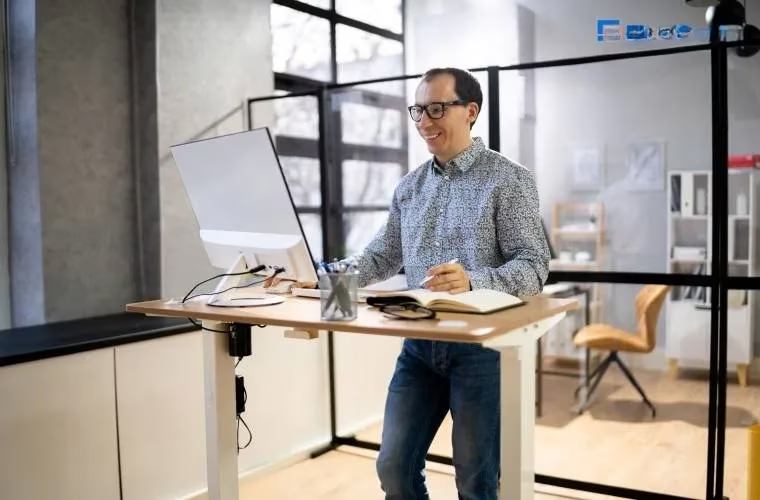
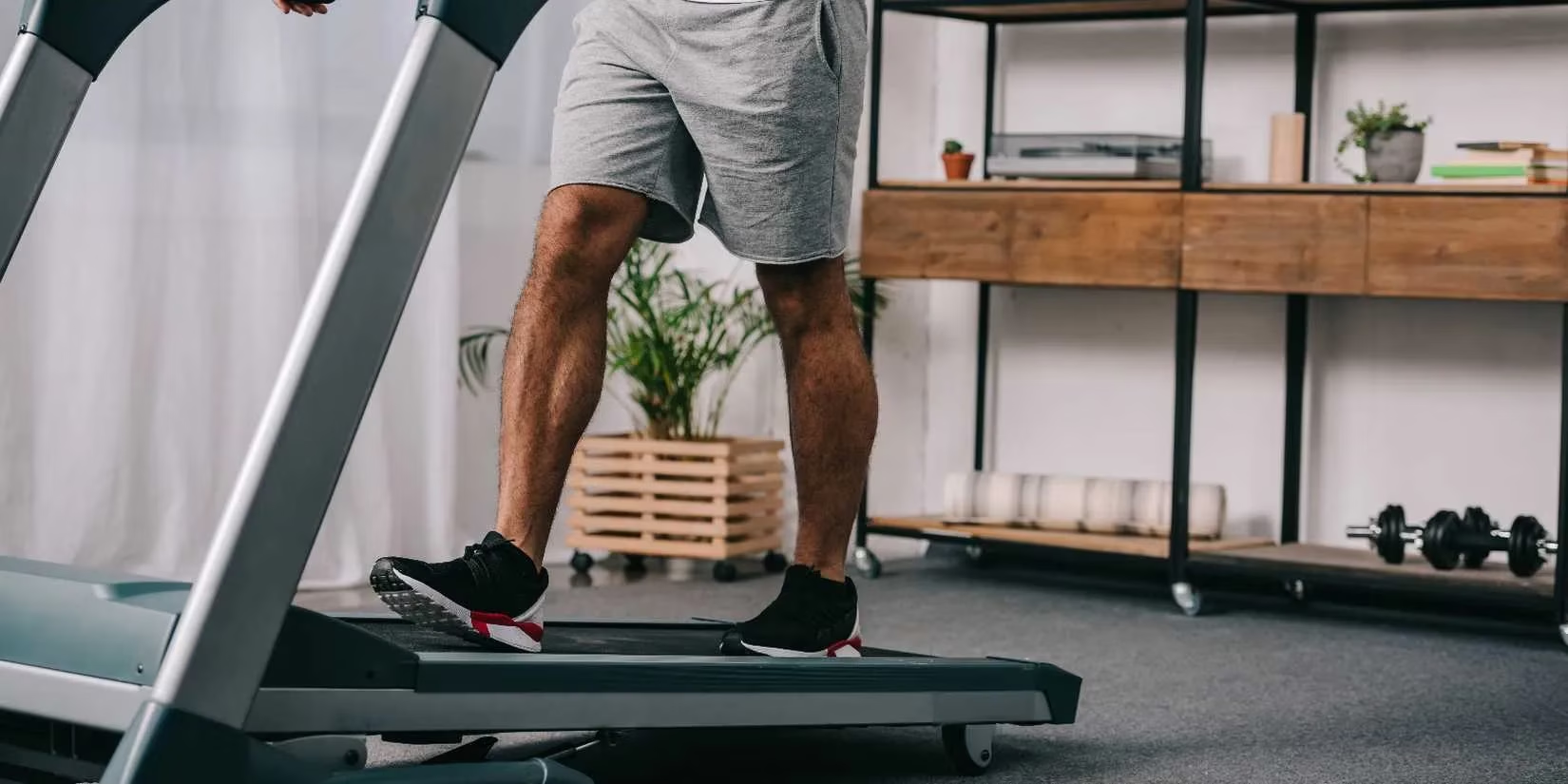
But why stop at sitting? The ultimate power-up for posture is standing. And we're not talking about a stationary, locked-knee vigil. The meta in 2026 is dynamic standing, facilitated by adjustable desks. Prolonged standing has its own pitfalls (like pressure on the veins), but the ability to transition fluidly between sitting and standing breaks the vicious cycle of sedentary stagnation. It's that lazy feedback loop—"I'm sitting, so I won't get water, so I'll just sit more"—that fuels many aches. Standing makes hydration runs effortless and keeps the metabolic fires burning. For the hardcore, integrating a walking pad or treadmill takes it to 'active work' level, fantastic for cardiovascular health and muscle engagement, though perhaps not for precision-headshot moments.
This brings us to a fascinating class of gear: Active Chairs. Don't let the name fool you; these aren't your grandfather's recliners. Think of them as 'unstable thrones.' Their entire philosophy is the antithesis of plush, enveloping support. By introducing an element of wobble, sway, or bounce—be it a kneeling chair, a balance stool, or even a trusty yoga ball—they force your body to recruit its core, leg, and stabilizing muscles subconsciously. You're not placed in a 'good' posture; you're compelled to find and maintain your own natural, comfortable alignment through micro-adjustments. It's continuous, low-level engagement. While not suitable for all, an active chair can be the perfect middle ground between the extremes of sitting and standing.
Finally, we must solve the puzzle of Monitor Height, a source of widespread misconception. The classic error? Cranking that screen up too high in the quest for a 'straight neck.' What often happens is your body rebels, your chin juts forward, shoulders roll in, and you end up staring up like a baby bird waiting for food—a direct path to debilitating neck pain. You can't fix this by willpower alone; holding a strained position is a losing battle.
The counterintuitive fix? Go lower. A monitor that's slightly too low is generally better than one that's too high. A good rule of thumb is to have the top of the screen at or slightly below your eye level when you're in your natural, relaxed seated position. But be smart about it! If your workflow (or game UI) has critical info at the bottom of the screen, adjust accordingly. The goal is for your primary focal point to be in a comfortable, neutral sightline, letting your neck and head rest in a natural, unforced posture.
The 2026 Pain-Free Arsenal: Quick Reference
| Strategy | Core Principle | Key Benefit |
|---|---|---|
| Ditch Lumbar Reliance | Build intrinsic muscle strength | Prevents weakness & injury risk |
| Embrace Active Sitting | Constant micro-movements | Fights stiffness, promotes circulation |
| Employ a Footrest | Achieve proper knee/hip angle | Reduces sciatica risk, increases stability |
| Adopt Dynamic Standing | Break up sedentary periods | Improves metabolism, eases hydration |
| Experiment with Active Chairs | Engage stabilizers via instability | Encourages natural posture subconsciously |
| Optimize Monitor Height | Prioritize neutral neck position | Prevents forward head posture & neck strain |
Remember, champion, your setup is a living ecosystem. The goal isn't to find one perfect, static pose to endure, but to create an environment that encourages gentle, constant movement and supports your body's natural mechanics. Now go forth, configure your battle station, and game (or work) on—pain-free.
This perspective is supported by data and reporting from Newzoo, and it aligns with a simple reality of modern play: longer sessions are increasingly common, so ergonomics has to scale beyond “buy a chair” into sustainable habits. Pairing active sitting with frequent posture changes, plus alternating sit/stand blocks and keeping screens at a neutral eye line, helps reduce the fatigue that builds when players stay locked into one position for hours.
Comments