As I sit here in 2026, surrounded by a lifetime of audio gear, the gentle hum of a vacuum tube amplifier warming up in the corner, I reflect on the journey of sound. The quest for the perfect speaker isn't just about specs and decibels; it's a search for a companion that understands the whispers of a violin and the thunder of a bass drop. I've lived with them all—the towering monoliths, the elegant shelf-dwellers, and the humble desktop guardians. Each has whispered its own story into my ears, and today, I want to share that intimate dialogue. Let's find which one speaks to your soul.
🎵 The Anatomy of a Voice: Drivers, Enclosures, and Power
Before we can listen, we must understand. The soul of a speaker lies in three fundamental elements, a trinity that shapes every note.
-
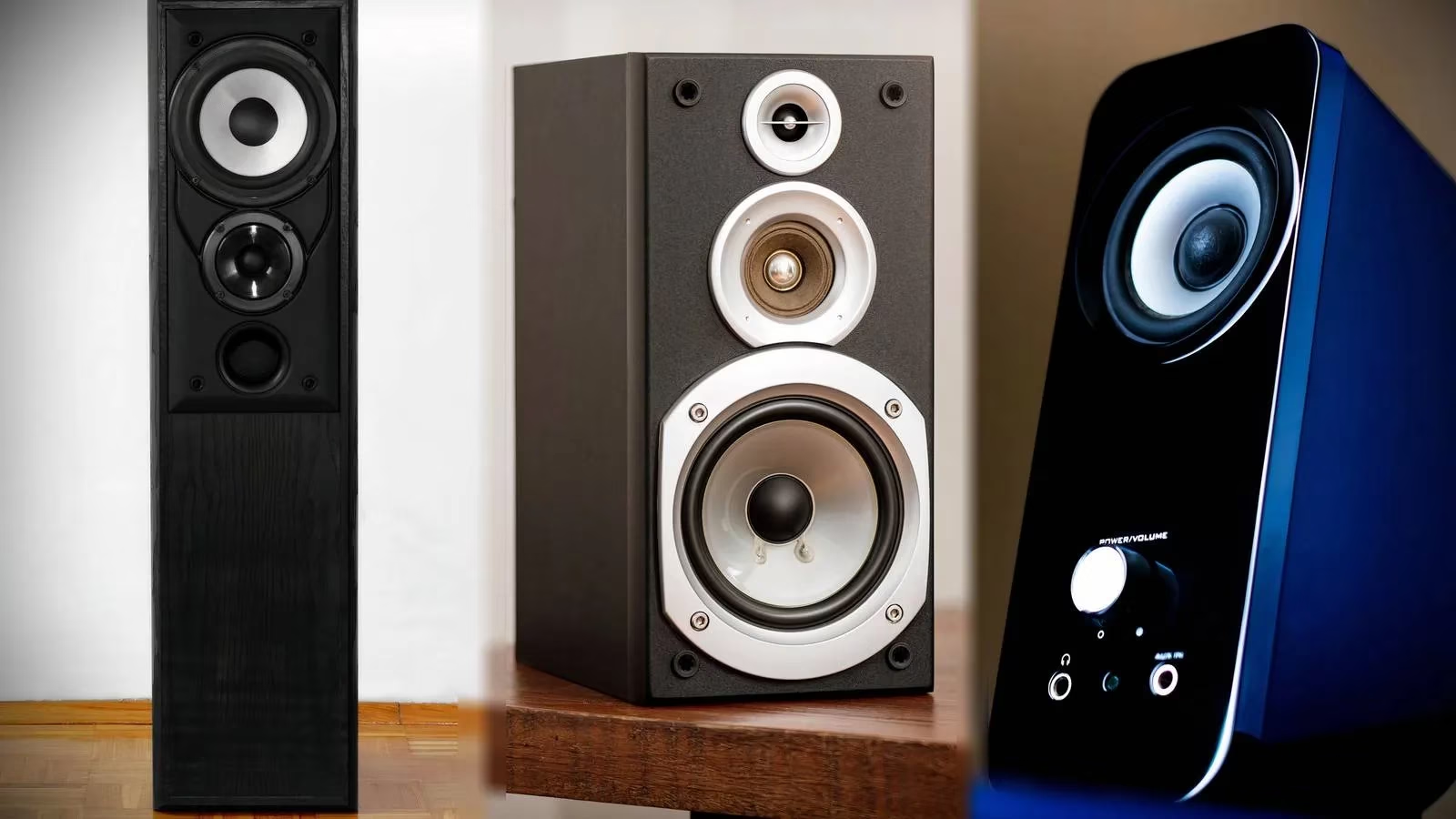
The Driver (The Vocal Cords): This is the heart that beats to the rhythm of electricity. It transforms silent signals into the symphony we feel. A tweeter sings the high notes, crystalline and sharp. A woofer gives body to the mids and lows, the warmth in a voice. The mightiest often house a dedicated subwoofer, a beast that makes the floor tremble with frequencies you feel more than hear.
-
The Enclosure (The Resonant Body): The cabinet is not just a box; it's an acoustic chamber. Its size and design are the breath control for the driver. A large enclosure allows for deeper, more authoritative bass, letting sound waves develop and breathe. It’s the difference between a whisper in a closet and a chant in a cathedral.
-
The Power (The Breath): Measured in watts, this is the potential energy. More power, handled by quality components, means louder, cleaner sound without the voice cracking into distortion. It’s the fuel for the journey.
This is the language they all speak. Now, let's meet the individuals.
🗼 The Titans: Floor-Standing Speakers
These are my old friends, the steadfast oaks of the audio forest. They stand proud, three to four feet tall, their presence commanding respect and space.
In their spacious wooden bodies, they often cradle a dedicated family of drivers: a tweeter, a midrange, and a powerful woofer, sometimes even their own built-in subwoofer. This separation of labor is their superpower. It allows each driver to focus on its own range, resulting in sound that is crisp, well-defined, and effortlessly powerful across all genres. From the delicate pluck of a harp to the crushing weight of a synth, they handle it with grace and authority.

Their large enclosures are not for show. They provide the acoustic space for those drivers to perform, delivering deep, room-filling bass that you don't just hear—you experience in your chest. With high power handling, they can play loud, clean, and immersive, making them the undisputed champions for large living rooms, dedicated home theaters, and the serious music listener.
But they ask for commitment. They need room to breathe, and once placed, their weight makes them semi-permanent fixtures. Their connectivity is often a playground for an enthusiast: binding posts for heavy-gauge wire, options for bi-amping, and both wired and wireless modern conveniences. This performance and flexibility come at a cost, typically ranging from $300 to well over $2,000 in 2026. You are not just buying a speaker; you are investing in a centerpiece.
📚 The Elegant Companions: Bookshelf Speakers
Ah, the bookshelf speaker. The clever minimalist. Don't let the name fool you; these are not lesser beings, but refined spirits. Compact, often around a foot tall, they are the diplomats of the speaker world—versatile, adaptable, and surprisingly potent.
They typically employ a two-way design: a woofer for the mids and lows and a tweeter for the highs. This clever combo delivers a wide, detailed, and remarkably balanced soundstage. What they may lack in earth-shattering bass compared to their tower siblings, they make up for in clarity and precision. They are the perfect choice for jazz, acoustic, and vocal-centric music, where nuance is king.
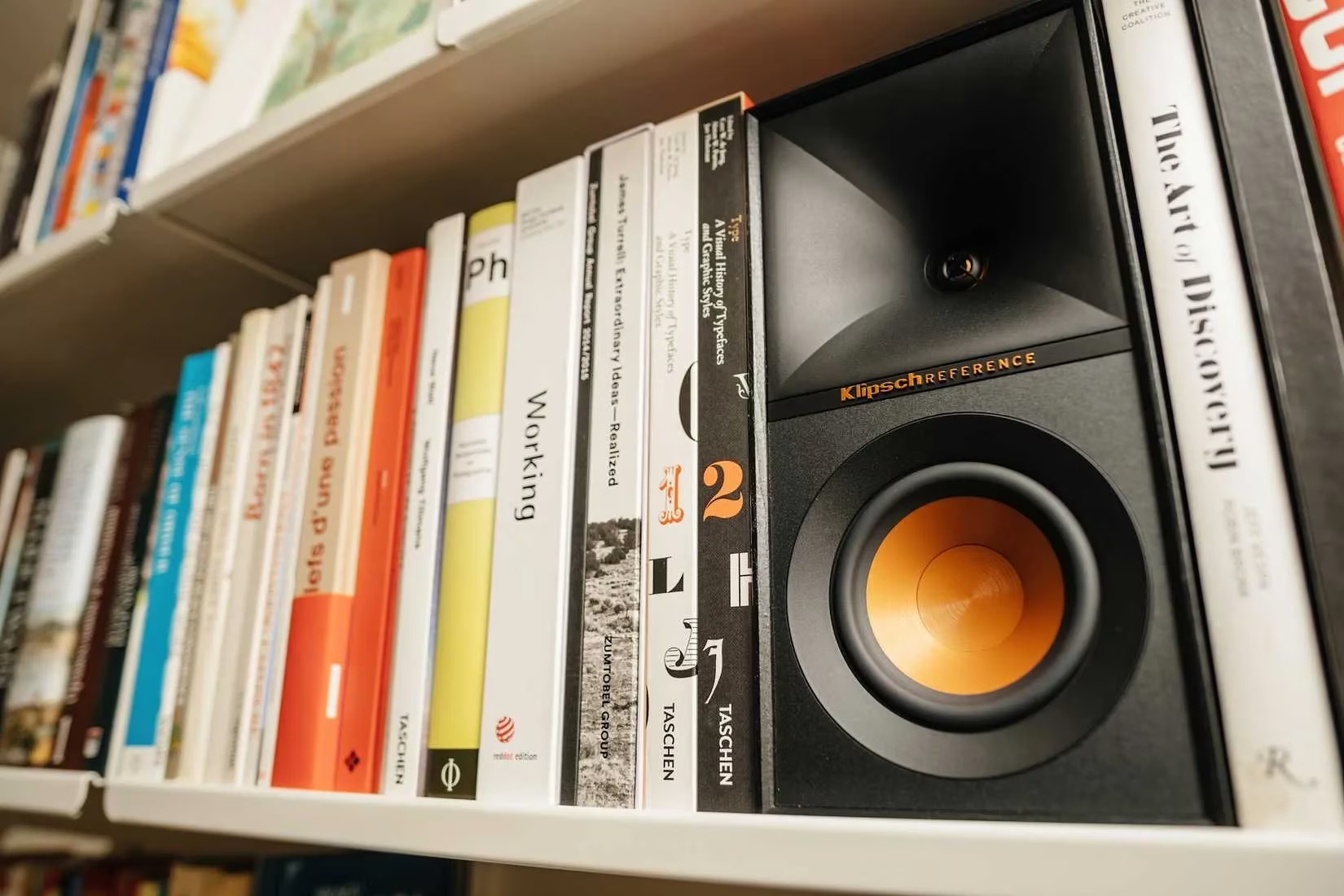
Their true genius lies in their placement flexibility. On a stand, on a shelf, mounted on a wall—they adapt. A word of caution: if destined for a shelf, seek out a front-ported design so the bass port isn't choked, stifling its voice.
This adaptability makes them the darling of surround sound setups and smaller spaces. They connect via RCA, spring clips, or wirelessly, playing nicely with receivers and streaming devices. While they can shine alone, their story often expands. Pair them with a separate subwoofer, and you have a full-range system that challenges the towers. The initial cost is friendlier ($100 - $1,000), but the potential for add-ons (stands, subwoofers, more speakers) is part of their modular charm. They are for the apartment dweller, the office audiophile, and anyone who values great sound without monolithic footprints.
💻 The Intimate Whisperers: Desk Speakers
These are my daily confidants. Sitting faithfully beside my monitor, they are the sound of my work, my focus, and my private musical escapes. Desk speakers are the epitome of personal audio in 2026.
Smaller than bookshelves, they are engineered for the near-field listening experience. They sit close, creating a sweet spot of sound that is for you and you alone. They often use a single, efficient full-range driver or a compact woofer-tweeter pair. The sound is direct, clear, and perfect for gaming, video calls, and getting lost in a playlist without disturbing the world.
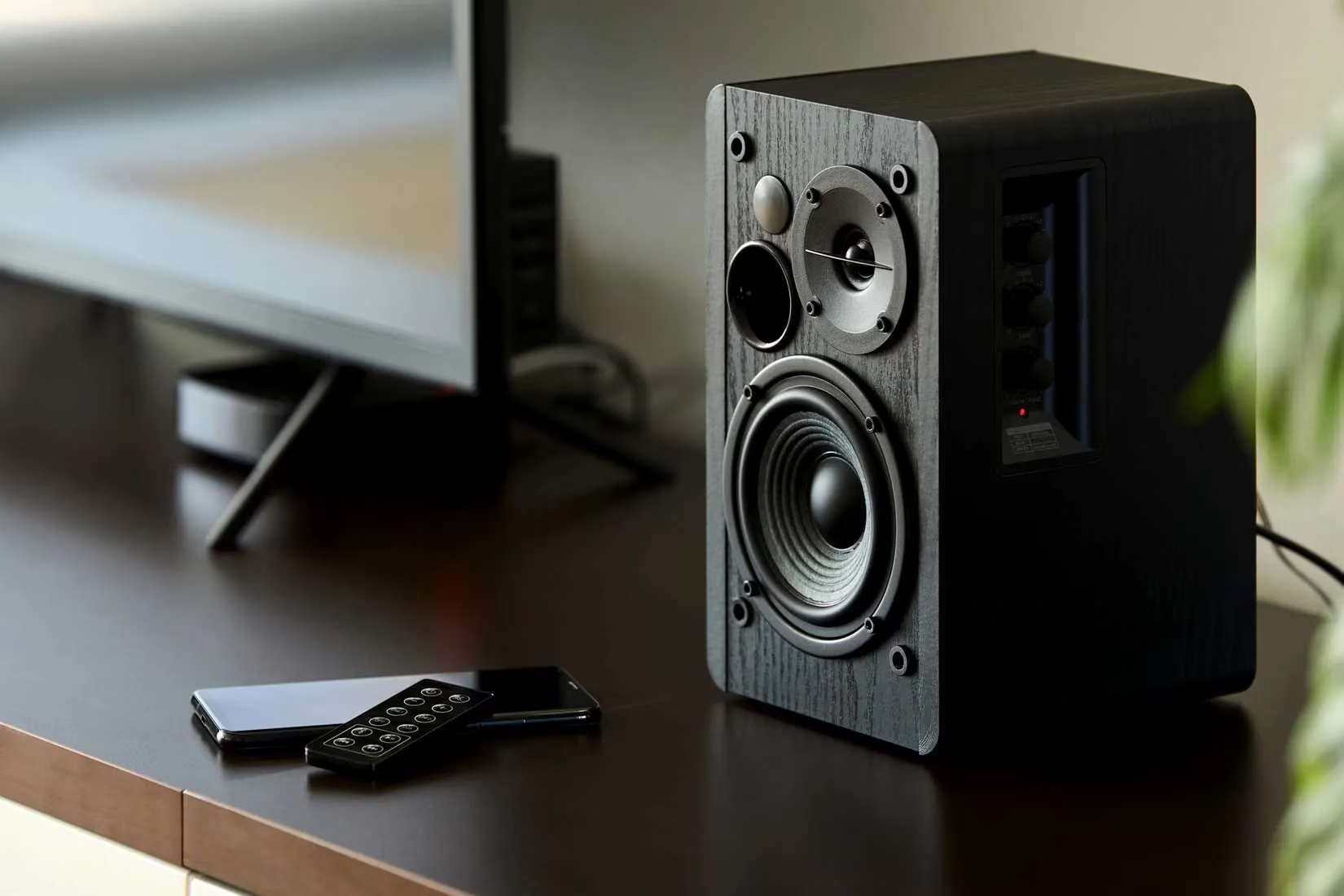
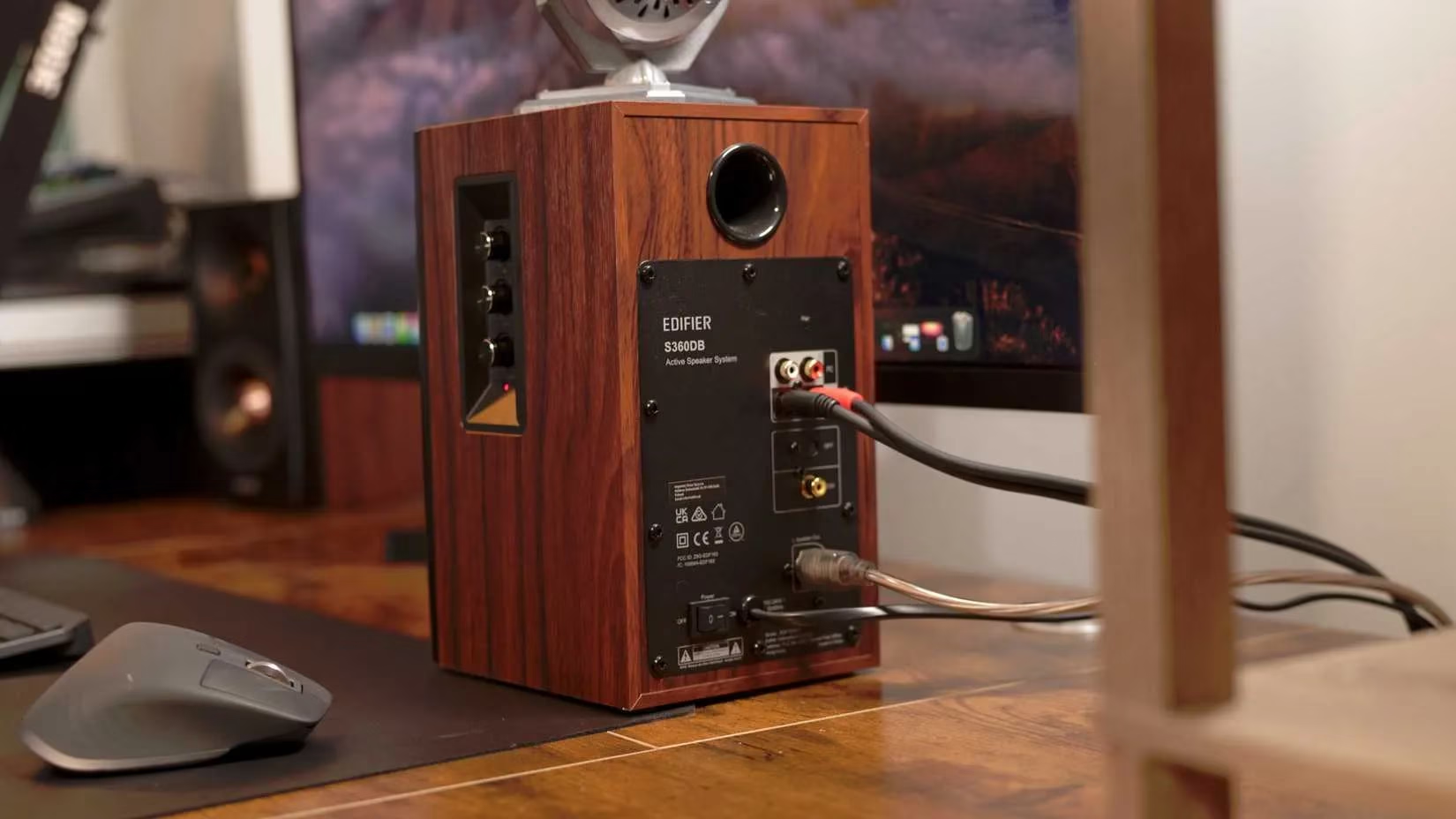
Their setup is poetry in simplicity. USB for digital clarity, a 3.5mm jack for universal connection, or Bluetooth for untethered freedom—plug and play. The modern desk speaker has grown smart. Many now feature integrated voice assistants, touch controls, and smart home connectivity. A popular evolution is the integrated battery, transforming them into portable sound hubs for any room.
They are the most affordable entry point ($30 - $500), though tech-laden models command higher prices. They ask for almost no space, just a corner of your desk. This is their realm: the bedroom desk, the compact home office, the dorm room. They don't fill a room with sound; they fill your mind with it.
The Final Chord: Choosing Your Sonic Partner
So, how does one choose? It is not a technical decision, but a personal one. Ask yourself:
-
What is the size of your stage? A grand hall needs a titan's voice. A cozy nook needs an intimate whisper.
-
What is the nature of your listening? Is it a shared, immersive experience, or a personal tête-à-tête with the music?
-
What is your story? Are you building a temple to sound, or seeking a faithful daily companion?
To help visualize the path, here is a summary of their spirits:
| Feature | Floor-Standing (The Titan) | Bookshelf (The Diplomat) | Desk (The Confidant) |
|---|---|---|---|
| Best For | Large rooms, home theater, critical listening | Versatile placement, stereo/surround setups, smaller rooms | Personal listening, desktop PCs, compact spaces |
| Sound Profile | Powerful, full-range, immersive, deep bass | Detailed, balanced, clear (may need a sub for deep bass) | Direct, clear, focused near-field sound |
| Space Needed | Significant floor space, permanent placement | Shelves, stands, moderate space | Minimal, desktop footprint |
| Typical Connectivity | Advanced (RCA, XLR, Bi-amp, BT/Wi-Fi) | Flexible (RCA, 3.5mm, BT, spring clips) | Simple (USB, 3.5mm, BT) |
| Price Range (2026) | $$$ ($300 - $2,000+) | $$ ($100 - $1,000) | $ ($30 - $500) |
In the end, the best speaker is the one that disappears. Not physically, but sonically. It’s the one that, when the music plays, you no longer hear a speaker—you hear the music itself, raw and emotional, as if for the first time. For the grand symphony of life, I turn to my floor-standers. For an evening of curated vinyl, my bookshelves sing. And for the thousand daily moments in between, my desk speakers are there, a constant, gentle whisper in my ear. Listen not just with your ears, but with your heart and your space. Your perfect sound is waiting.
Comments