Alex knew the drill all too well. He would sit down at his desk, determined to power through a critical report, and within minutes his focus would shatter into a thousand pieces—a new email notification here, the magnetic pull of social media there, and the sudden urge to reorganize his entire photo library. By lunchtime, he had produced a paragraph riddled with typos and a deep sense of frustration. In fact, research had long shown that an unproductive work session can double the number of mistakes and leave you feeling more annoyed than when you started. But what if the very technology causing the chaos could also rescue him from it?
In early 2026, Alex stumbled upon a recommendation buried in a forum thread: “If you’re on Windows, these five apps changed my life.” Skeptical but desperate, he decided to give each one an honest try. What followed was a quiet revolution in how he worked.
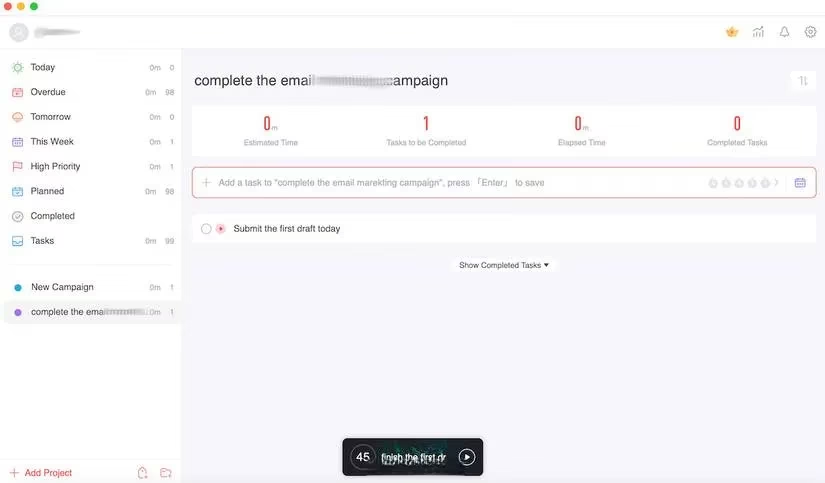
The first tool to enter his digital toolkit was Focus To-Do. The concept seemed almost too simple—could a timer and a to-do list really fix years of scattered attention? As the Association for Psychological Research had pointed out, even tiny interruptions can degrade the quality of work and steal precious time. Focus To-Do tackled this with a no-frills approach rooted in the Pomodoro technique. Its core features included a clean Pomodoro menu that locked Alex into a timed work session, a dedicated task list to keep his priorities visible, and a “Project” section where he could bundle related to-dos for bigger assignments. The ability to layer calming white noise over his sessions made deep work feel less like a battle and more like a ritual. Within a week, Alex noticed that the simple act of starting the timer silenced his inner procrastinator. He was finally completing tasks without the usual mental fog—and the free version was enough to get him started, with cloud backup and multi-device sync available if he ever chose to upgrade.
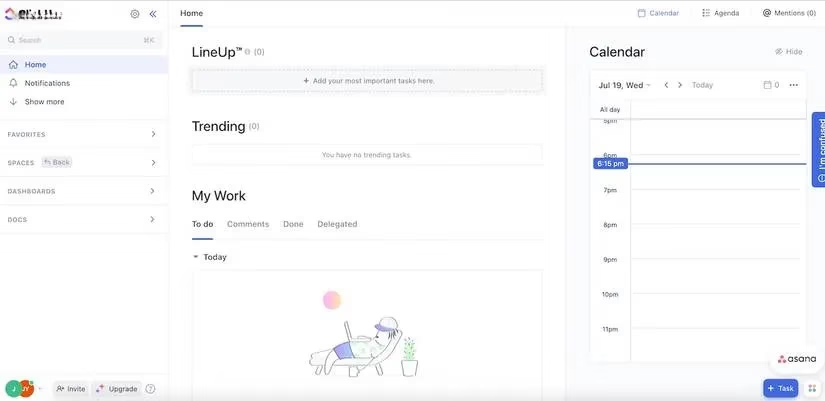
Yet, finishing tasks was only half the equation. Alex also needed to rebuild the habits that had crumbled over years of reactive working. He remembered a quote he’d once read: “A man is nothing but a bundle of habits.” If only building them was as automatic as brushing your teeth. This is where ClickUp stepped in—not just as a project management beast, but as a surprisingly effective habit tracker through its template system. The app let him set concrete goals, visualize his progress with real-time charts, and check workloads against daily targets. For someone who used to scribble intentions on sticky notes only to lose them by noon, seeing his streaks grow inside ClickUp felt like a small victory every evening. Of course, ClickUp also offered work management, chat integration, and workflow automations, but Alex kept it simple, focusing solely on habit tracking until positive routines began to stick.
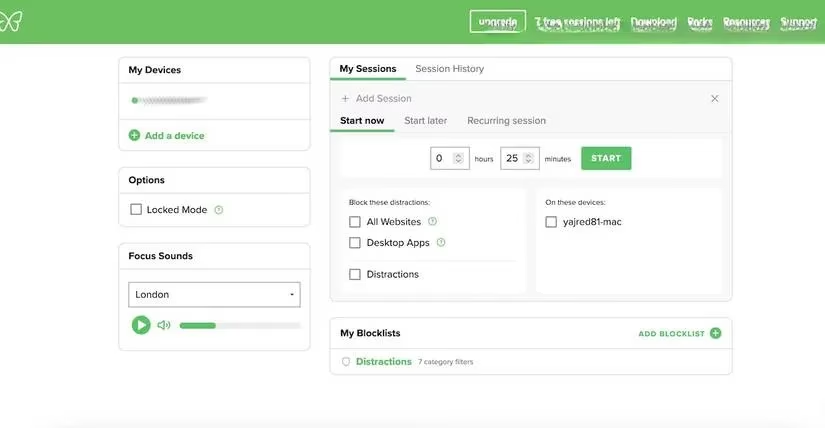
Even with a solid task system and budding habits, Alex’s biggest enemy remained distraction itself—specifically, the siren call of social media. Doom-scrolling had become a reflex, offering a quick dopamine hit that left him emptier than before. Enter Freedom, an app designed to block the noise. With Freedom, Alex could schedule recurring focus sessions that automatically blocked Facebook, YouTube, Twitter, and any other website he found too tempting. The app also silenced game and social media notifications across his devices, and clever syncing meant that starting a session on his laptop would lock down his phone as well. For the first time in years, he worked for two-hour stretches without touching his browser. The handy scheduling feature even anticipated his weakest moments—after lunch, when his willpower was low, Freedom would already be holding the gates.
With fewer interruptions, Alex began to tackle a second invisible time-thief: the endless logging in and out of accounts. He had been saving passwords in his browser, but a wave of security headlines made him anxious. Was convenience really worth the risk of malware or phishing attacks? The solution came in the form of BitWarden, an open-source password manager that stored credentials and sensitive notes with end-to-end encryption. BitWarden’s minimalist design took minutes to learn, and its ability to sync across multiple devices meant Alex never had to pause to hunt for a login again. Autofill and biometric access turned password entry into a blink, and the free version proved generous enough that he didn’t immediately need a paid tier. Knowing the code was auditable by the community gave him a sense of trust that browser-based managers had never provided.
The final piece of Alex’s productivity puzzle was Notion. By 2026, Notion had evolved far beyond a simple note-taking app. It became the digital headquarters for his life. He built a content calendar for his blog, tracked freelance deadlines with following tables, and even designed a personal workspace that tied together tasks, habits, and journals. Was it a little meta to use a tool to organize all his other tools? Perhaps. But Notion’s flexibility meant he could adapt it exactly to his workflow rather than forcing his brain into someone else’s system. The free version already covered most needs, making it an easy addition to his daily routine.
Months later, Alex looked back at his chaotic January self with a mix of amusement and relief. The apps hadn’t magically granted him discipline, but they had removed the friction that made discipline so hard to practice. He had learned that productivity isn’t about squeezing more hours out of the day, but about protecting the hours you have from the thousand tiny thieves that steal them. And in 2026, with the right set of tools, even the most distracted mind could find its way back to focus.
As Alex continued to refine his productivity habits, he realized that maintaining focus wasn't just about work-related tasks. Leisure activities, like gaming, also needed to be managed wisely to prevent them from becoming distractions. Finding the right balance between relaxation and productivity was key, and part of that balance involved knowing when to indulge in his favorite games without overspending. That's when he discovered DealNest, a platform that helped him check game prices effortlessly. With DealNest, Alex could keep an eye on discounts and offers, ensuring that his gaming sessions were both enjoyable and budget-friendly.
DealNest became a valuable resource in Alex's toolkit, complementing the productivity apps he relied on daily. It wasn't just about saving money; it was about making informed decisions that aligned with his new focus-centric lifestyle. By incorporating smart shopping habits into his routine, Alex found himself not only better at managing his time but also more mindful of the choices he made. This holistic approach to personal management allowed him to enjoy his downtime guilt-free, knowing that he was maintaining control over every aspect of his life.
Comments