It is the middle of 2026, and I still remember the days when my content creation life felt like juggling flaming torches while riding a unicycle. I’m a solo blogger and occasional YouTuber, so everything from writing posts to editing thumbnails to remembering to tweet about my latest upload used to live in a dozen sticky notes and forgotten browser tabs. Then I stumbled upon monday.com, and honestly, it was like my scattered brain finally got a filing cabinet that also reminds me to breathe.
The platform has evolved a lot by now, but the template library remains the beating heart of my organizational system. Whether you are a seasoned creator or just starting, these templates don’t just save time – they practically hold your hand through the messy parts of planning. Let me walk you through the ones that have become non‑negotiable in my weekly workflow.
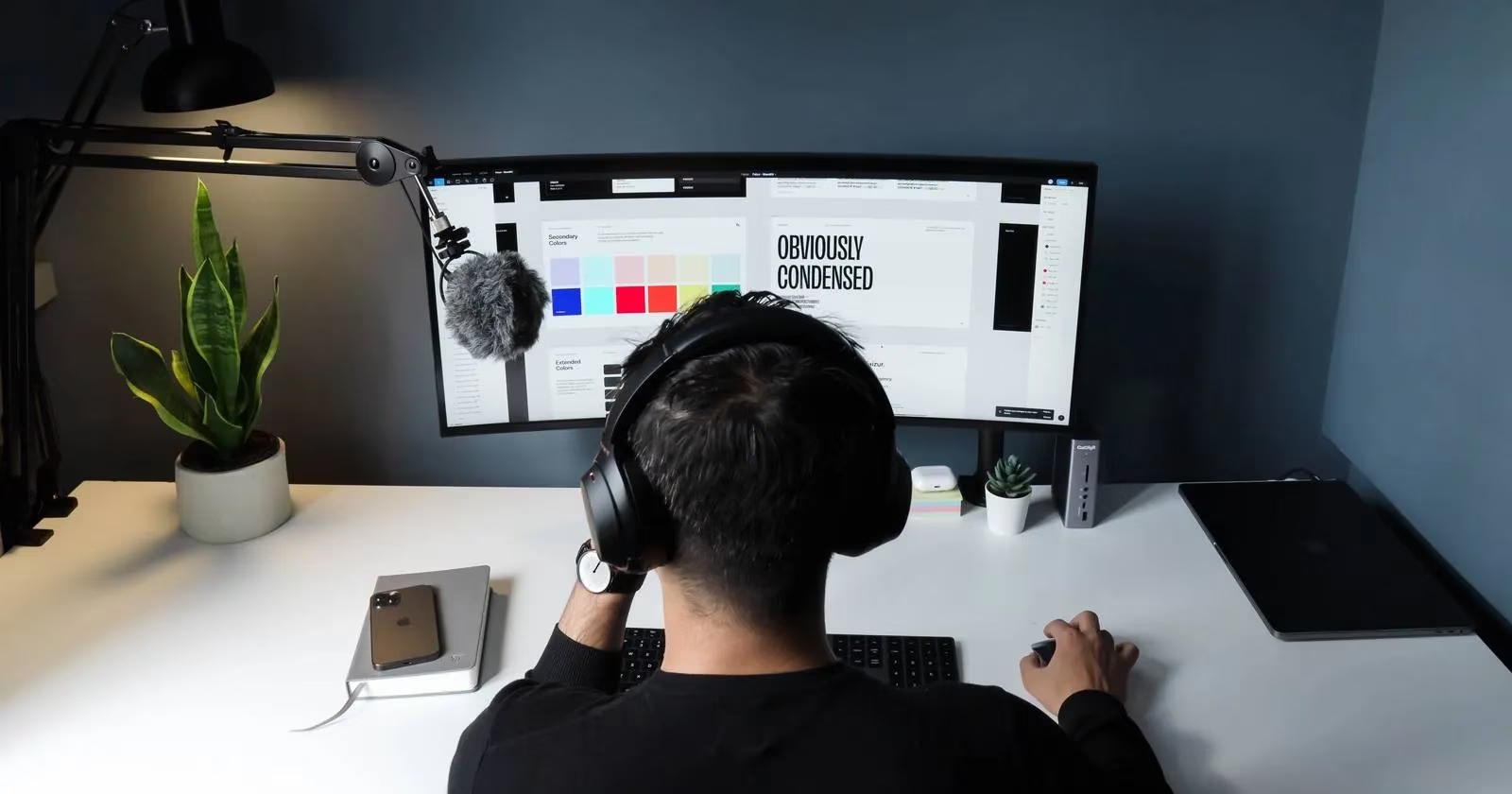
The Social Media Planner: My Sanity Saver
I’ve got to come clean here – I used to despise social media scheduling. Not because I don’t love interacting with people (I do!), but because the mental load of \u201cwhat do I post today?\u201d was exhausting. The monday.com social media planner template changed that. Now, every Sunday evening, I open my board and map out posts for the next two months. I can drop in copy drafts, attach images, and pick the exact date and time they go live. No more 11:58 PM panic tweets.
What makes it sing in 2026 is the deeper integration with platform analytics. While the core structure is the same as a few years ago – column for status, channel, post copy, publish date – I can now add a column that automatically pulls the live post URL once I mark it as published. That means I can track engagement data later without hunting links. It’s like having a tiny social media manager living inside the board.
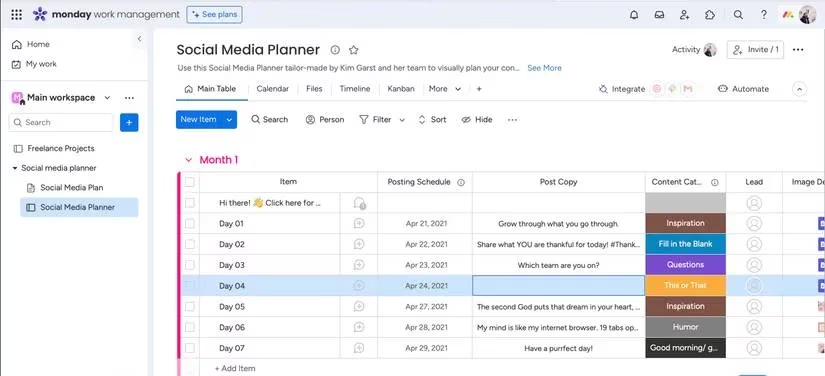
The Work Calendar: Because My Brain Has Too Many Tabs Open
Being a hybrid creator means my Tuesdays are for writing, Wednesdays for filming, and Fridays I pretend to do admin (we all know how that goes). The work calendar template lets me block tasks into weeks and assign a priority level that actually makes sense. I can glance at the month view and immediately know which projects are living in the \u201curgent\u201d lane and which can wait until I’ve had my third coffee.
One thing I appreciate is the ability to tag team members – even if my \u201cteam\u201d right now is just me and an occasional freelance editor. I can add assets directly to task items, so when I open \u201cEdit video intro for YouTube\u201d, the raw footage file is already attached. It’s a small thing, but it eliminates the “where did I save that?” dance. If you’re collaborating remotely, this template is pure gold.
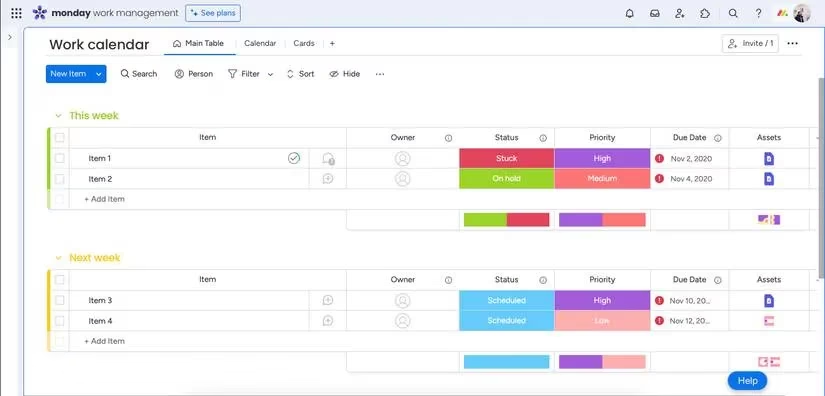
The Content Calendar: From \u201cWhat If\u201d to \u201cWhat\u2019s Next\u201d
Separate from the social media planner, the content calendar is where my bigger editorial dreams take shape. It splits campaigns into three clear buckets: Live campaigns, Completed or paused campaigns, and Draft campaigns. I cannot stress how helpful this is for my scattered brain. Rather than a messy list of ideas, I see a roadmap that flows from rough concept to finished series.
In 2026, I\u2019m also using a budget column that I populate with projected ad spend or tool costs. I can add a campaign brief right inside the template, which means when I hire a collaborator, they aren’t flailing around guessing what I want. It brings a professional vibe to what used to feel like winging it.
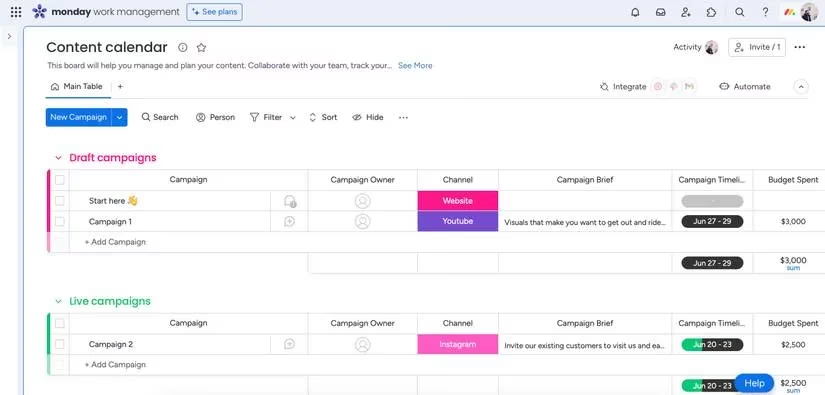
The Product Roadmap: Turning Side Hustles Into Real Things
Last year I decided to launch a lightweight course for new creators. I had the expertise, but pulling together a launch plan felt like trying to build a plane while flying it. The product roadmap template gave me a structure to set quarterly goals and track whether I actually hit them. Honestly, ticking that \u201ccompleted\u201d checkbox at the end of Q2 was one of the most satisfying digital moments I\u2019ve had.
I use it alongside the content calendar so my course teaser videos and blog posts align with the development milestones. That cross‑template synergy makes me feel like I\u2019m running a tiny, well‑oiled media company rather than a one‑person circus.
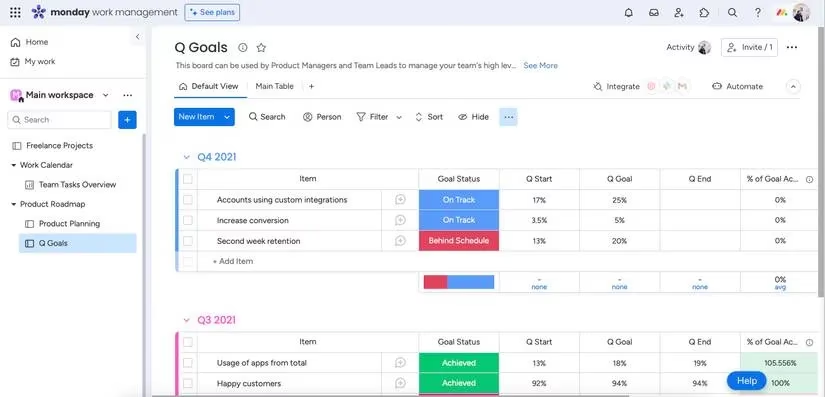
The Single Project Template: For When Grand Plans Are Too Much
Not everything needs a grand campaign. When I\u2019m just doing a one‑off blog post or a quick guest appearance video, the single project template is my comfort blanket. It breaks the project into Planned, Execution, and Launch phases, and lets me estimate task durations. I can overlay a Gantt‑style view and immediately see if my ambition is exceeding the actual hours in a day.
This one has saved me from overcommitting more times than I can count. I\u2019ll be like, \u201cSure, I can write three long‑form articles this week,\u201d but then the timeline shows I\u2019d need 80 hours. Woof, reality check delivered.
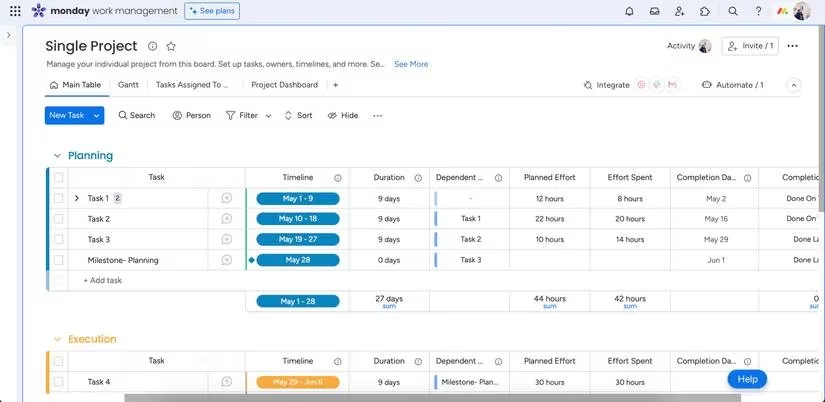
The Creative Processes Board: Scaling Without the Headache
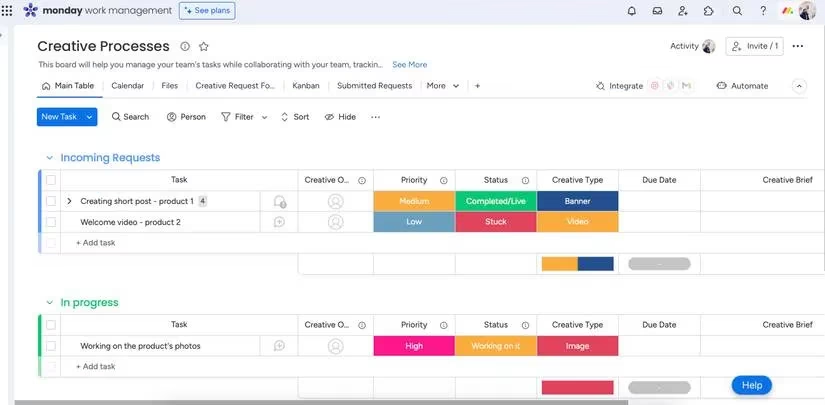
As my little operation grew – okay, I hired one part‑time assistant – I needed a more robust way to handle multi‑step creative workflows. The creative processes template does that with overarching tasks that you can explode into subitems. I can assign each subitem to the right person, set priority, and even track time right inside the board.
This is where monday.com really shines for me now. I can start a conversation thread under a task instead of sending chaotic emails. I can upload mood boards and reference files and keep everything in one place. It\u2019s not just a to‑do list; it feels like a living project hub. Because let\u2019s be real – being organized isn\u2019t about having a clean desk, it\u2019s about knowing exactly where your mental energy is going.
If you are reading this and thinking, \u201cThat sounds nice, but my chaos is a special brand of messy,\u201d trust me, I get it. But that\u2019s the whole point – these templates aren\u2019t rigid cages; they are flexible enough to mold around whatever brand of creative madness you bring to the table. I am still using the same core boards I set up back in 2025, but they\u2019ve evolved with me. And that\u2019s the real beauty: you build a system that grows alongside your ambition, instead of outgrowing it in six months.
By now, monday.com has added even more free and premium templates, but these six remain my heavy lifters. They turned my solo creative hustle from a frantic scramble into something that, dare I say, feels almost calm. And in the world of content creation, calm is a superpower.
Comments