I still remember the morning in early 2026 when my small design studio spiraled into chaos. We were juggling three client projects, a rebranding sprint, and a dozen task threads scattered across email, sticky notes, and a group chat that buzzed like an angry beehive. The breaking point came when a critical deadline slipped through our fingers simply because a single action item got buried. That day, I knew we needed a digital compass—a project management tool that could turn our cacophony into a symphony.
But the search felt like walking into a vast library where every book promised to reveal the secret of order. Too many options clamored for attention, each claiming to be the best. I realized that the real trick was not finding the most popular tool, but one that fit us like a tailor-made suit. Before even opening a trial, I sat with my morning coffee and asked hard questions. Are we a lone wolf or a pack? Our tiny team was growing, so we needed something that could scale without groaning under the load. What did we actually need? Task lists, milestones, and a timeline that felt like a breathing calendar, not a rigid stone tablet. I craved customization—recurring tasks that looped like a heartbeat, and dependencies that acted as a row of dominoes, where one falling automatically nudged the next.
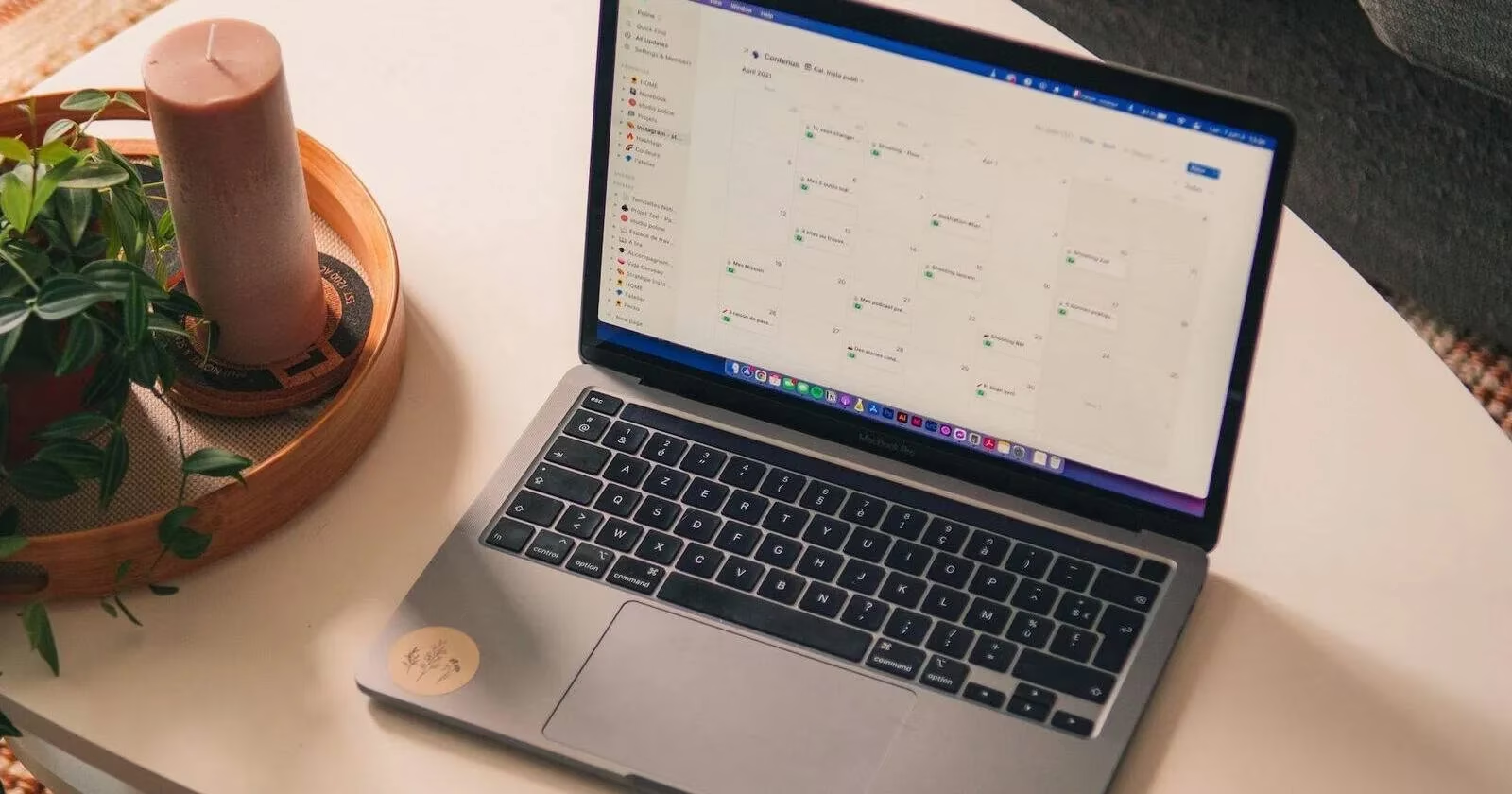
I soon learned that versatility is a double-edged sword. Tools like Notion are akin to a Swiss Army knife that can transform from a humble to-do list into a fully fledged CRM. But with that power came a labyrinth of menus that sometimes left me feeling like a tourist lost in a foreign city. My team craved simplicity—a dashboard that greeted us each morning with a clear, at-a-glance heartbeat of our projects. We needed an interface so intuitive that a new member could navigate it after a five-minute tour. White space, clean fonts, and a logical flow became non-negotiable. After all, we were going to live inside this tool, so it had to feel less like a chore and more like a trusted colleague.

Collaboration, I discovered, is the oxygen of any tool. We experimented with platforms that let us assign tasks with surgical precision, triggering instant notifications that zapped through the digital silence. Admins, team members, and clients needed specific visibility layers, like transparent walls in a hive, each seeing only what they required. The comment threads under tasks became our new watercooler—questions, file exchanges, and the odd celebratory emoji when a milestone was hit. Without that seamless collaboration, a tool is just a glorified checklist.
As our projects grew from seedlings to towering oaks, scalability and integration became critical. I likened our tool to a conductor’s baton—it had to orchestrate an ever-expanding ensemble of apps: cloud storage, email marketing, time trackers. If it couldn’t talk to our other software, notes of data would crash into each other, producing noise, not music. The ability to add custom fields, filters, and views meant we could spotlight only high-priority tasks tagged with a client’s name, cutting through the fog of data.

Remote work in 2026 is ubiquitous, so a mobile app was not a luxury but a lifeline. One teammate often sketched ideas from a park bench; another reviewed progress while commuting. The app had to mirror the desktop experience—responding to comments, checking deadlines, and keeping the project’s pulse within reach. I was relieved to find that most top contenders had robust mobile versions, so we didn’t fall off the grid when away from our desks.
Security, a facet I had naively overlooked, soon became a priority. Sensitive client blueprints and financial data flowed through the tool, making SSL certificates and two‑factor authentication as essential as locks on a door. I imagined our data resting in a vault wrapped in layers of static-proof bubble wrap, accessible only to those holding a time-limited code. Automated backups gave me peace of mind that a server failure or cyberattack wouldn’t turn our history into ashes.
Pricing played its part too. Many tools offered a free tier, but like the sirens’ song, premium features lured us toward subscriptions. I weighed the cost against the value of adding more team members and integrations, while silently thanking online reviews that warned of laggy customer support. Eventually, we settled on a tool that felt like a warm, well-organized workshop—flexible, secure, and reasonably priced.
Reflecting on this journey, I see that a project management tool is more than software; it’s a digital backbone for growth. For a freelancer like me, it transformed a chaotic stream of tasks into a clear, flowing river. The best part? I now use it for note-taking, roadmaps, and even my personal workout calendar. That all-in-one magic is what makes the search worthwhile. If you’re standing at the edge of a similar chasm, start by listening to your own workflow. The right tool won’t just manage projects—it will compose them into a masterpiece.
Comments