As a professional gamer who juggles intense training sessions, strategy planning, and community management, I've always relied on note-taking apps to keep my life organized. For years, Notion was my digital command center—its sleek interface and collaborative features made it easy to track game stats and team schedules. But then, Obsidian stole the show with its mind-blowing graph view and offline-first design, letting me connect ideas without an internet hiccup. Fast forward to 2025, and I decided to test Anytype, the new kid on the block promising to blend the best of both worlds. It's ambitious, I'll give it that, but the sheer complexity had me feeling like I'd stumbled into a puzzle game with no tutorial. 😅 After weeks of tinkering, I realized that while Anytype delivers on privacy and innovation, it's not the seamless upgrade I hoped for—and here's why I'm sticking with Obsidian for now.
What Makes Anytype Stand Out
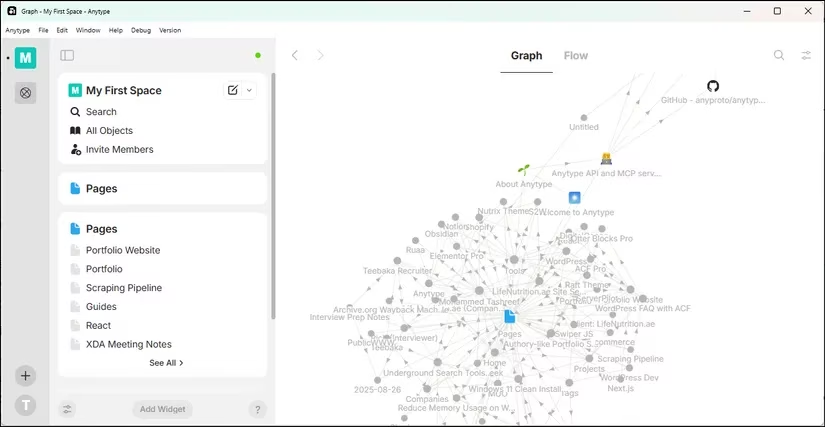
When I first fired up Anytype, it was clear this wasn't just another Notion clone. Everything you create—notes, tasks, images, even teammates—becomes an "object" that lives right on your device. That means no cloud dependency, which is a huge win for privacy nuts like me. All your notes are encrypted locally, and when you sync, it's peer-to-peer with end-to-end encryption. Even Anytype can't peek at your data! The interface is sleek and modern, reminding me a bit of Obsidian, but without tabs, which I sorely missed. The mindmap view is a visual treat, showing how objects relate to each other in a way that's instantly graspable. For instance, linking a game strategy note to a teammate object felt intuitive once I got the hang of it. And templates? They're lifesavers for consistency—no more starting from scratch every time. Here's a glimpse of the app in action:
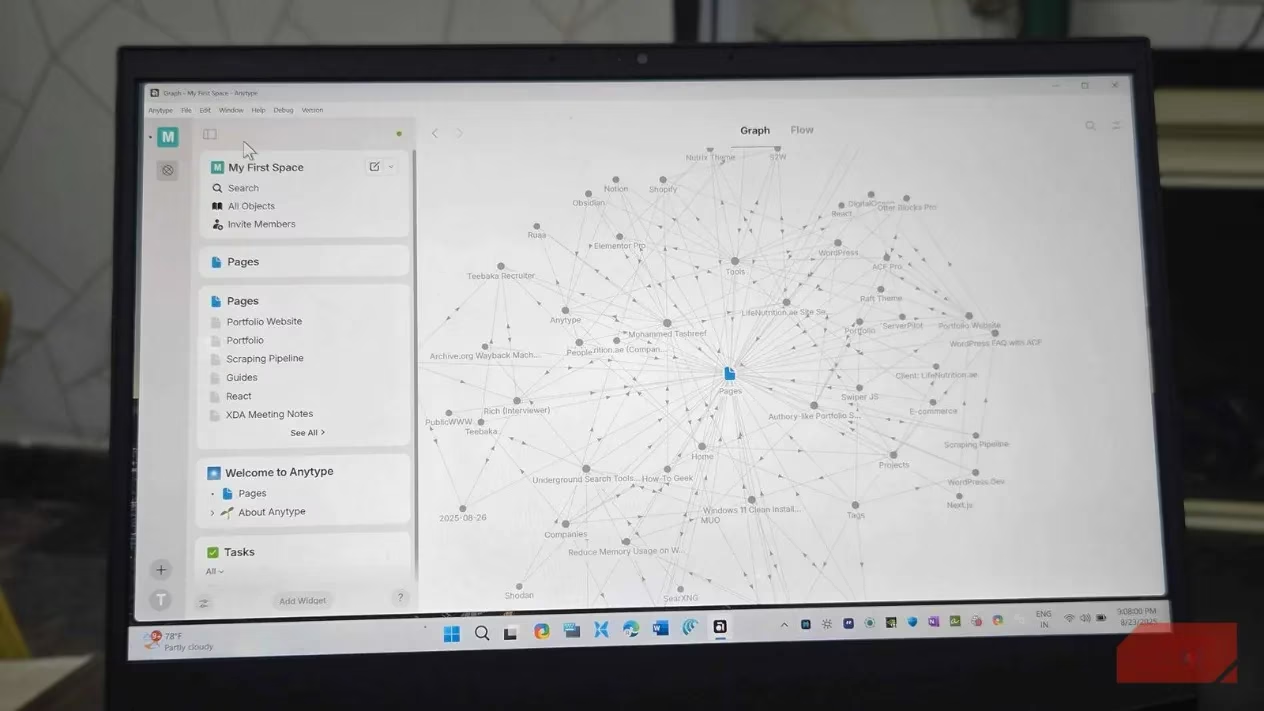
Plus, the login and encryption setup is straightforward, emphasizing that local-first approach:
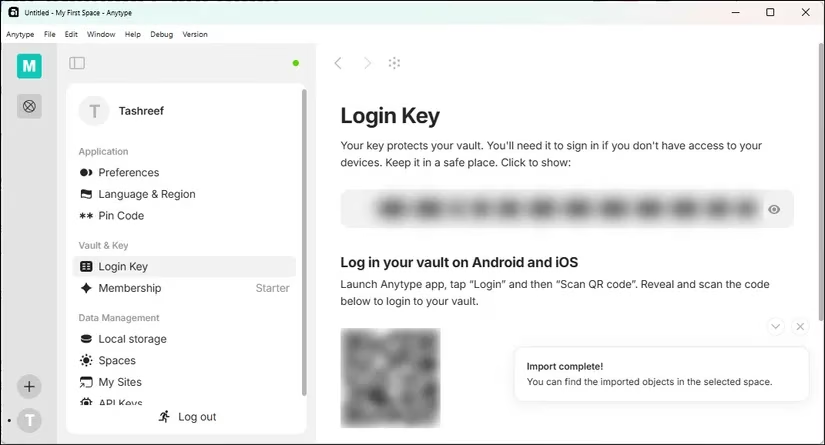
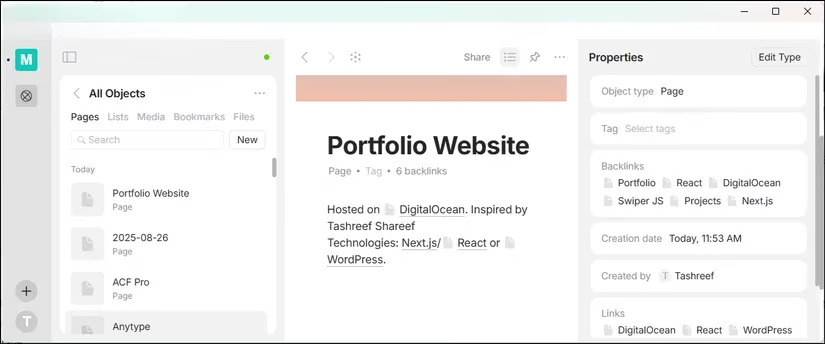
But here's where it gets tricky: every action requires deliberate choices. Jotting down a quick meeting note? You must decide if it's a "Note" or a "Meeting" object, then link each attendee as a "Person." Tasks aren't just checkboxes—they're objects nested in "Projects." It's powerful once you adapt, but oh boy, does it slow you down. For a gamer like me, who needs to capture ideas mid-match, this felt like an unnecessary level of complexity.
Anytype vs. Notion: The Integration and AI Gap
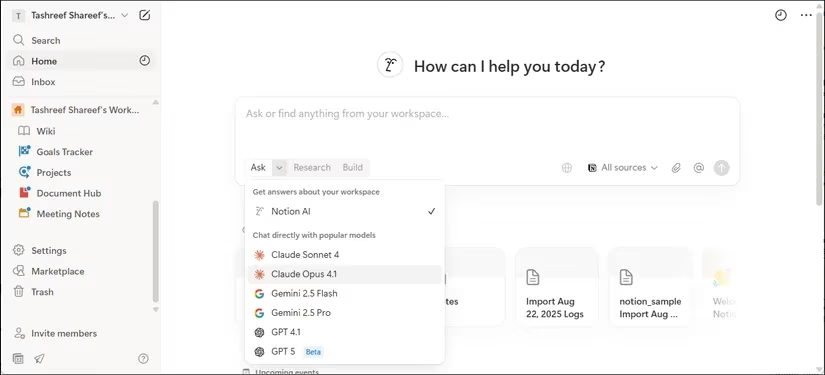
Comparing Anytype to Notion is like pitting a stealthy ninja against a Swiss Army knife. Notion's biggest strength? Its vast ecosystem of integrations. With over 8,000 apps connected via Zapier and direct links, I could auto-sync my Google Calendar for tournament dates or pull in Slack messages without breaking a sweat. Anytype, on the other hand, treats integrations like kryptonite. The company insists it's all about protecting privacy—every external link could be a data leak. So, if you're used to Notion's AI magic summarizing your scrim notes or generating content, you'll hit a wall with Anytype. No AI here, because processing data elsewhere violates their end-to-end encryption promise. That's a deal-breaker for me, especially when prepping for esports events where quick insights matter. 🎮
Here's a look at Notion's AI features in action—something Anytype just can't match:
Collaboration-wise, Notion still reigns supreme. On the free plan, Anytype lets you create three shared spaces with three editors each (or ten with the paid Builder plan), all encrypted so even Anytype can't snoop. But it feels basic—no real-time commenting, task assignments, or mentions. Notion's collaboration is like a well-oiled team fight: fluid, dynamic, and packed with features. For my gaming squad, this meant smoother communication and fewer missteps. Anytype's privacy is commendable, but in 2025, Notion's flexibility makes it the go-to for team play.
Anytype vs. Obsidian: The Plugin and Cost Conundrum
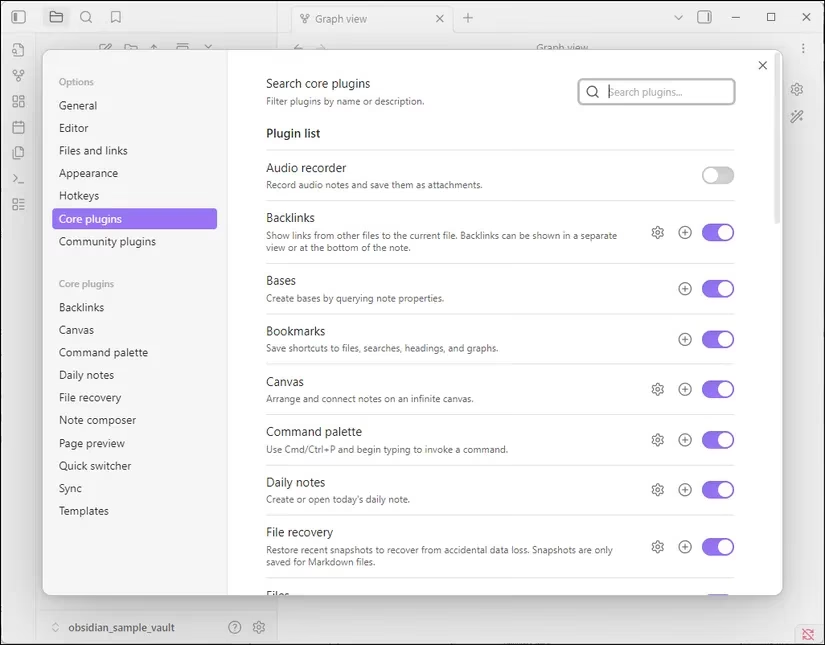
On paper, Anytype should be Obsidian's twin—both champion local storage and user control. But in reality, they're worlds apart. Obsidian's secret weapon? Its massive plugin repository. With over 2,000 community plugins, I've customized it into everything from a strategy tracker to a lightweight CRM. Setting them up can be a chore, sure, but once done, it's uniquely mine. Anytype's object-based system is theoretically stronger—objects have properties and relations that markdown files can't touch—but without plugins, you're stuck with the basics. It's like having a high-end PC with no mods; functional but uninspiring.
Check out Obsidian's plugin tab—endless possibilities:
Graph views? Obsidian's is practical and organic, showing genuine links between notes. Anytype's mindmap is prettier but feels forced, like it's trying too hard:
Cost is another battleground. Obsidian is completely free, even commercially—no storage limits or paywalls. I can sync via iCloud or Dropbox at zero cost, or opt for their $4/month sync service for convenience. Anytype's free tier gives unlimited local storage and peer-to-peer sync, but only 100MB for cloud backups. Need more? The Builder plan costs $10/month or $96/year for 128GB. For a budget-conscious gamer, Obsidian's freedom wins hands down. 💸
The Steep Learning Curve and Usability Hurdles
Let's be real: Anytype isn't for the faint of heart. Both Notion and Obsidian have learning curves, but Anytype cranks it up to expert mode. The terminology alone—like renaming "Sets" to "Queries" and "Relations" to "Properties" in recent updates—helps a bit, but the core complexity remains. If you're new to PKM (personal knowledge management), expect a steep climb. Even as an app veteran, I spent days fumbling through workflows. Every note feels like a multi-step quest, which kills spontaneity. Here's how objects look—simple at first glance, but deep down, it's intricate:
To summarize the key differences, here's a quick comparison table I whipped up based on my experience:
| Feature | Anytype | Notion | Obsidian |
|---|---|---|---|
| Local-First Storage | ✅ Encrypted on device | ❌ Cloud-based | ✅ Local with optional sync |
| Integrations | ❌ None (privacy focus) | ✅ 8,000+ apps | ✅ 2,000+ plugins |
| AI Features | ❌ Not available | ✅ Summarize, generate content | ❌ Limited without plugins |
| Cost | Free: 100MB backup; Paid: $10/month | Freemium model | ✅ Free, optional sync $4/month |
| Learning Curve | ⚠️ High (object-based system) | ⚠️ Medium | ⚠️ Medium to high |
| Best For | Privacy purists, small teams | Teams needing integrations | Solo users, customization lovers |
This table highlights why Anytype might appeal to niche users but falls short for broader needs.
Why I'm Sticking with Obsidian
After all this, I'm back with Obsidian. Anytype delivers on its privacy promises—no doubt—but it solves problems I don't have while creating new ones. Migrating my 800+ note vault from Obsidian would mean rebuilding from scratch with fewer tools and more friction. Privacy is crucial, especially with sensitive game strategies, but it's not worth abandoning a system that just works. For new users without legacy data, Anytype could shine, but in 2025, Obsidian's blend of freedom, flexibility, and zero cost is unbeatable for my gaming grind. So, if you're eyeing Anytype, tread carefully—it's innovative, but innovation without ease is a game over screen in disguise. 🎮💔
Comments